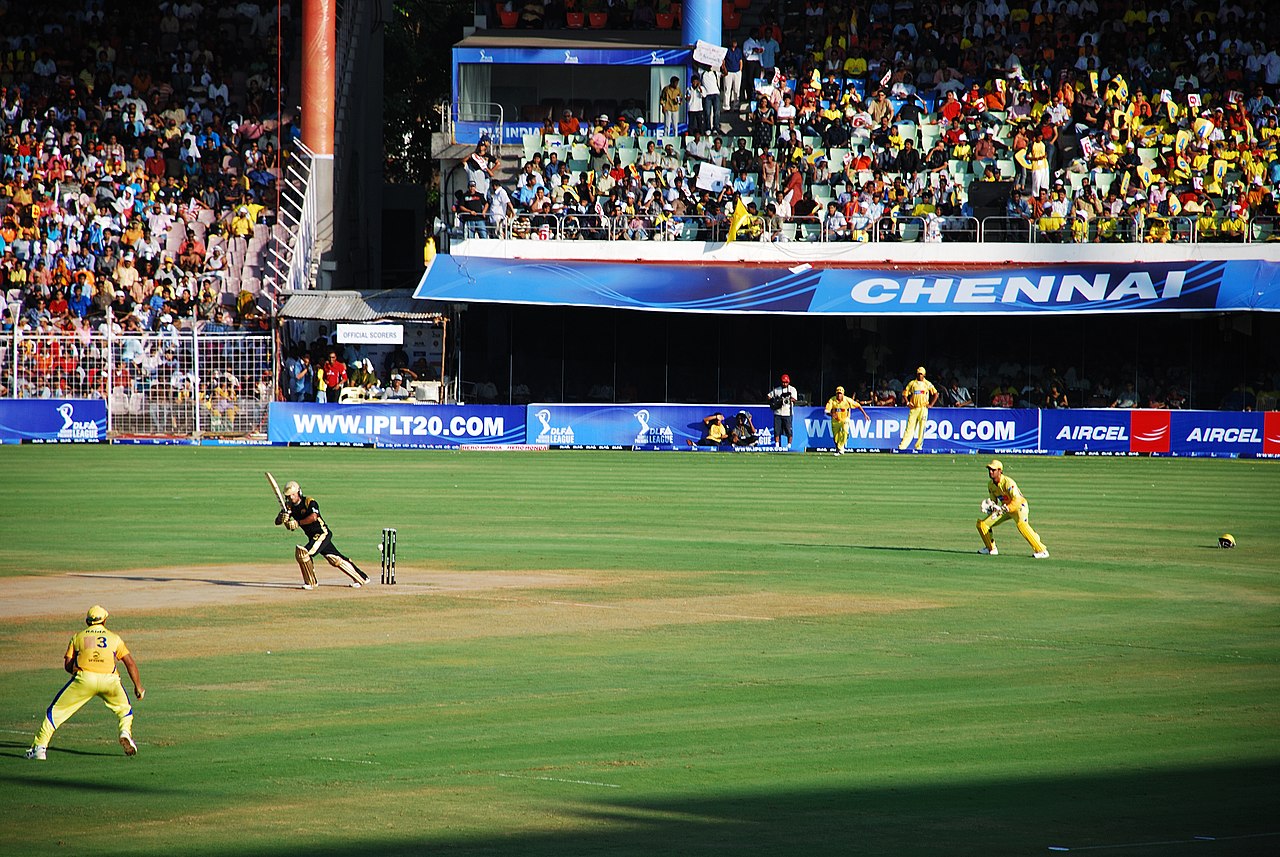
 CSK vs KKR, Chepauk, 2012. Photo: Chandrachoodan Gopalakrishnan, CC BY 3.0, via Wikimedia Commons
How the IPL Works: The Complete Beginner's Guide
Ten teams, 74 matches and a playoff system with a built-in second chance. Everything a new fan needs to follow the Indian Premier League, in one read.
The Indian Premier League is a professional Twenty20 cricket competition, founded by the Board of Control for Cricket in India (BCCI) in 2008. Every year, roughly from late March to late May, ten city-based franchises play for the trophy in front of full stadiums and a global TV and streaming audience.
If you are new to it, the IPL can feel like a lot at once: auctions, Impact Players, qualifiers and eliminators. It is actually simple once you see how the pieces fit together.
The ten teams
The current line-up is Chennai Super Kings, Mumbai Indians, Royal Challengers Bengaluru, Kolkata Knight Riders, Sunrisers Hyderabad, Rajasthan Royals, Delhi Capitals, Punjab Kings, Gujarat Titans and Lucknow Super Giants. The last two joined in 2022, when the league expanded from eight teams to ten.
Each squad has between 18 and 25 players, with a maximum of eight overseas players. On match day, no more than four overseas players can be in the side at once, so every team is built around a core of Indian talent.
The league stage
There are 70 league matches. Each team plays 14 games, seven at home and seven away. To fit this in, the ten teams are split into two groups of five. Each team plays the others in its own group twice, one team from the other group twice, and the remaining four teams once.
- Win: 2 points
- No result (usually rain): 1 point each
- Loss: 0 points
When teams finish level on points, the tiebreaker is net run rate, which compares how quickly a team scores with how quickly it concedes over the whole season. That is why you will often hear captains talk about winning "with a big margin" late in the league.

The playoffs
The top four teams qualify for the playoffs. The format rewards finishing in the top two with a second chance:
| Match | Who plays | What happens next |
|---|---|---|
| Qualifier 1 | 1st vs 2nd | Winner goes to the Final. Loser gets another chance in Qualifier 2. |
| Eliminator | 3rd vs 4th | Loser is out. Winner goes to Qualifier 2. |
| Qualifier 2 | Loser Q1 vs Winner Eliminator | Winner goes to the Final. |
| Final | Winner Q1 vs Winner Q2 | Champions crowned. |
Inside a match
Each side bats for up to 20 overs. A few rules shape how a T20 innings is played:
- Powerplay: for the first six overs, only two fielders may stand outside the 30-yard circle, so this is the best time to attack.
- Strategic timeouts: each innings has two short breaks, one called by the bowling side and one by the batting side, for teams to regroup and change plans.
- DRS: teams can review umpiring decisions with ball-tracking and replays. In the IPL, wides and no-balls can also be reviewed.
- Impact Player: teams can bring in one substitute during the match, effectively playing 12. Here's how it works.
The caps and the awards
Two coloured caps change hands throughout the season. The Orange Cap is worn by the leading run-scorer and the Purple Cap by the leading wicket-taker. At the end of the season there are also awards for the Most Valuable Player, the Emerging Player of the season and the fair-play team.
Where do the players come from?
Teams keep some players from year to year and buy the rest at the IPL auction, where every franchise has the same salary purse. A "mega auction" every few years resets most squads, and smaller auctions fill gaps in between. Read our full guide to the auction.
Quick summary: 10 teams play 14 league games each, the top four reach the playoffs, and the top two get a second chance. Everything else is detail.